
Cash crop farming is for profit.
Also called commercial farming and cash cropping, it is a farming venture in which cash crops are grown.
Cash crops are those which are produced for the purpose of generating cash or money.
The products are therefore intended to be marketed for a profit.
Individual farmers just naturally grow cash crops as a livelihood and to generate cash for the family’s needs.
An extra profit is needed to fund the next cropping activities.
The farming methods employed differ from farmer to farmer and from country to country.
In developing countries, many traditional farmers continue to adopt their customary practices.
But in highly industrialized countries, intensive cultivation and mechanized farming are common.
This is so with large plantations operated by multinational companies and by individuals having sufficient capital.
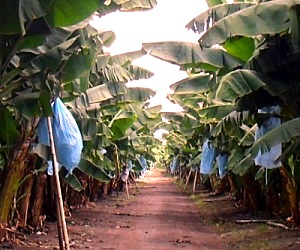
Monocropping or sole cropping, which is the growing of a single crop on a piece of land, is common with cash crop farming while subsistence farming usually practices multiple cropping or mixed cropping.
In contrast to the aim of cash cropping, subsistence farming is practiced for sustenance, that is, for the food of the farmer and his family.
Subsistence crops are also grown for the feed of the farmer’s livestock including working animals.
How Cash Crop Farming Evolved
When cash cropping started cannot be established with certainty.
Its historical evolution can only be deducted using logic as related to the history of agriculture and civilization.
Before the advent of agriculture, primitive man obtained food by hunting wild animals and gathering fruits and nuts from natural stands.
Even in the most recent time, this practice has survived.
But the discovery that certain plants can be grown from seeds caused a gradual transformation from hunting-gathering to farming.
The primitive man began to domesticate plants and so there was no longer any reason for him to maintain his nomadic way of life in search of food.
Groups of men lived in villages, and soon the populace was divided into two groups: urban and rural.
The urban people engaged in the processing and trading of the raw materials that the rural people supply.
This gave rise to the modern civilization which is characterized by advanced agricultural technology, long-distance marketing, and occupational specialization among the populace.
This must be how cash crop farming evolved.
Based on archaeological records, farming or agriculture started at least 10,000 years ago.
The when and where are continuously debated.
However, the credit for the first civilization to be established goes to the Sumerians.
By 5000 BC the Sumerians had developed special agricultural techniques including intensive crop farming on large-scale, monocropping, organized irrigation, and the use of labor with specialized skills. They invented the plow.
They grew barley, chickpeas, lentils, wheat, dates, onions, garlic, lettuce, leeks, and mustard. They also raised cattle, sheep, goats, and pigs.
They used oxen as their primary draft animal and donkeys or equids for transport.
Archaeological artifacts indicate that they were engaged in trading with neighboring regions centered around the Persian Gulf.
The land of the Sumer is located in what is now called Fertile Crescent.
It lies between two great rivers, the Euphrates and Tigris.
Modern-day countries within the Fertile Crescent are Iraq, Jordan, Lebanon, Syria, Israel, and parts of the Palestinian Territories, besides Turkey and Iran.
REFERENCES
- Chapman, S.R. and L.P. Carter. 1976. Crop Production: Principles and Practices. San Francisco: W.H. Freeman and Co. p. 431-441.
- Plantagenet Somerset Fry. 1972. Answer Book of History. Hamlyn House, Feltham, Middlesex, England: The Hamlyn Publishing Group Ltd. pp. 8-10.
- Wikipedia. 2010. Cash crop. Retrieved August 30, 2010 from http://en.wikipedia.org/wiki/Cash_crop.
- Wikipedia. 2010. Civilization. Retrieved August 30, 2010 from http://en.wikipedia.org/wiki/Civilization.
- Wikipedia. 2010. Fertile crescent. Retrieved August 30, 2010 from http://en.wikipedia.org/wiki/Fertile_Crescent.
- Wikipedia. 2010. Sumer. Retrieved August 30, 2010 from http://en.wikipedia.org/wiki/Sumer.
